7 On-Page SEO Mistakes That Are Hurting Your Rankings
Many businesses invest time and money into content creation but still don’t see results in search rankings. Often, the problem isn’t the content itself — it’s avoidable on-page SEO mistakes that are quietly working against you. Let’s go through the most common ones.
1. Ignoring Title Tags and Meta Descriptions
Your title tag and meta description are often the first thing a potential customer sees in search results. If they’re missing, too generic, or stuffed with irrelevant keywords, you lose clicks even if you’re ranking reasonably well. Every page should have a unique, compelling title and description that accurately reflects its content.
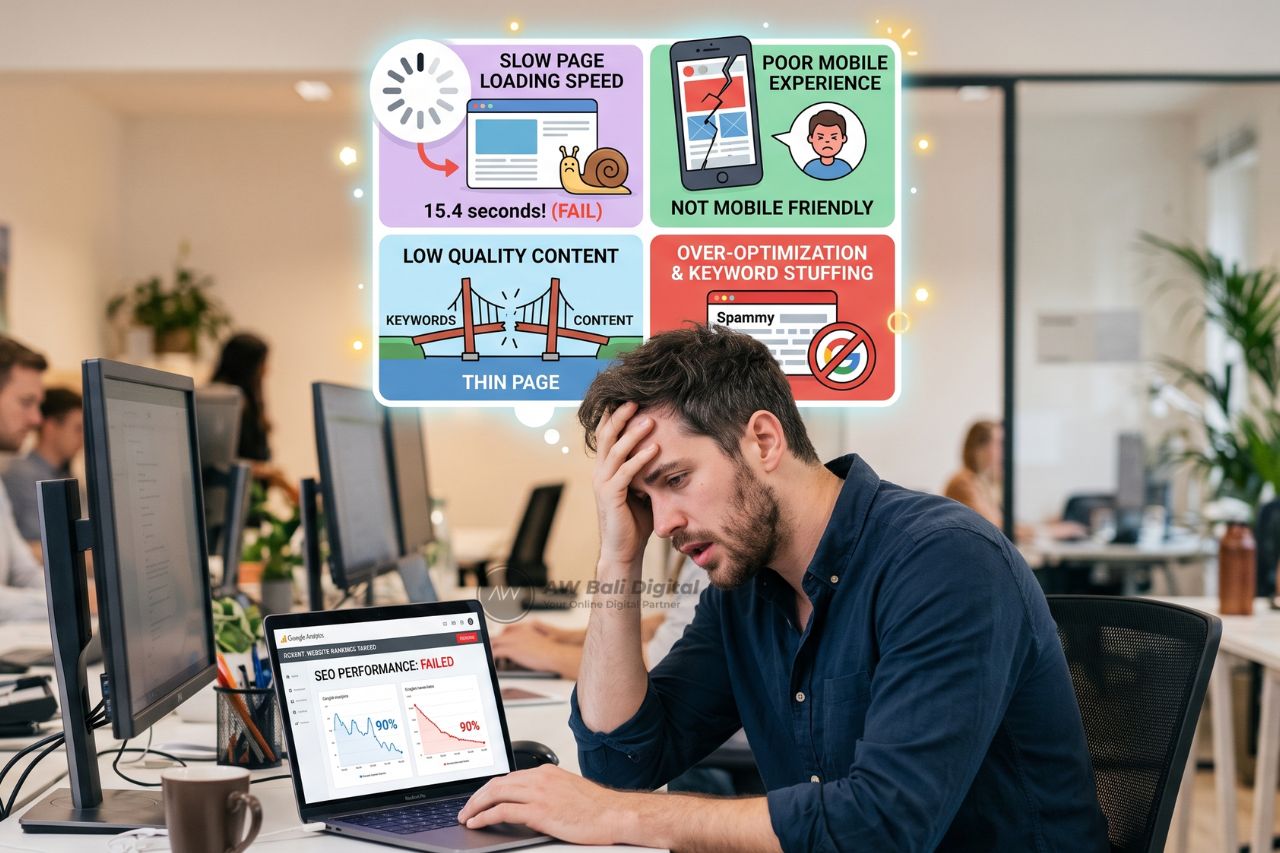
2. Slow Page Loading Speed
Google has made it clear: page speed is a ranking factor. If your website takes more than a few seconds to load, visitors will leave before they even see your content — and search engines notice this high bounce rate too. Compressing images, using efficient code, and choosing reliable hosting all contribute to faster load times.
3. Poor Mobile Experience
The majority of searches now happen on mobile devices. If your website isn’t fully responsive or has elements that are difficult to use on a smaller screen, you’re losing both rankings and customers. Google uses mobile-first indexing, meaning the mobile version of your site is what’s primarily evaluated.
4. Thin or Duplicate Content
Pages with very little text, or content copied from elsewhere, provide little value to search engines or users. Every important page should have substantial, original, and helpful content that genuinely answers what the visitor is looking for.
5. Missing or Broken Internal Links
Internal linking helps both users and search engines navigate your site and understand how pages relate to each other. Broken links create a poor user experience and waste the “link equity” that could otherwise help your important pages rank better.
6. Keyword Stuffing
Repeating the same keyword excessively in your content might have worked a decade ago, but today it can actually hurt your rankings and make your content sound unnatural and spammy. Modern SEO favors content that reads naturally while still covering the topic comprehensively.
7. Neglecting Header Structure
Using proper H1, H2, and H3 tags isn’t just about visual hierarchy — it helps search engines understand the structure and main topics of your content. Pages without clear headers often perform worse, even with great content underneath.
Fixing These Issues
The good news is that most on-page SEO issues are fixable without a complete website overhaul. A proper technical and on-page audit will identify exactly which of these mistakes are affecting your specific website, allowing for targeted fixes rather than guesswork.
Consistently avoiding these mistakes — and routinely checking for new ones as your website grows — is part of what separates websites that steadily climb in rankings from those that stay stuck on page two.
Want a professional team to handle your on-page SEO every month? Download our SEO & GEO Service Proposal to see how our packages can fix these issues and keep your website optimized continuously.